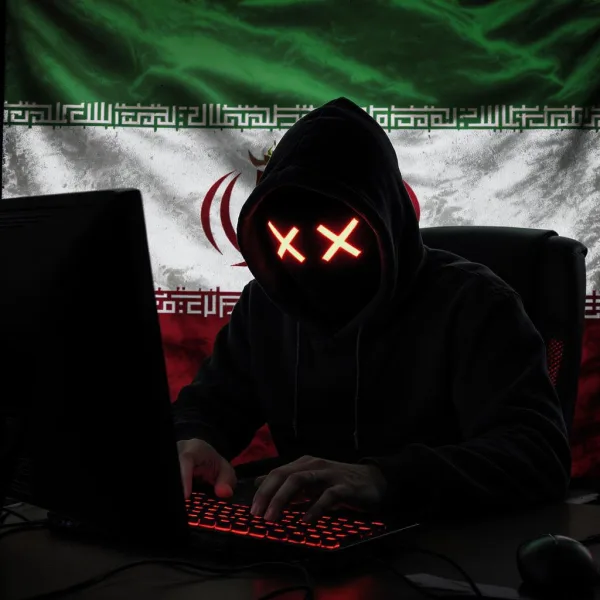

China’s CL-STA-0969 group is targeting Southeast Asian telecommunications networks.

China’s CL-STA-0969 group is targeting Southeast Asian telecommunications networks.

Since early 2024, major telecommunications organizations across Southeast Asia have faced attacks from an advanced state-sponsored cyber threat actor identified as CL-STA-0969. Security intelligence suggests a likely association with Chinese cyber-espionage operations, given the group’s methods and tools, which demonstrate a deep familiarity with telecommunications systems, high operational security, and technical adaptability.
Anthropic revokes OpenAI’s access to Claude code ahead of long-awaited GPT-5 launch.

Anthropic revokes OpenAI’s access to Claude code ahead of long-awaited GPT-5 launch.

In a consequential move within the rapidly evolving artificial intelligence sector, Anthropic has suspended OpenAI’s access to its Claude API, citing violations of its terms of service. The decision follows Anthropic’s discovery that OpenAI engineers had been using Claude’s coding features—known as Claude Code—at a critical time preceding the expected launch of OpenAI’s next flagship model, GPT-5.
Anthropic dethrones OpenAI as the leading LLM provider for the Enterprise Sector.

Anthropic dethrones OpenAI as the leading LLM provider for the Enterprise Sector.

In a pivotal shift within the artificial intelligence landscape, Anthropic has surpassed OpenAI to become the foremost provider of large language models (LLMs) for business applications as of mid-2025. According to multiple industry analyses, Anthropic now holds 32% of enterprise LLM usage—up from just a fraction two years ago—while OpenAI’s share has dropped to 25% after previously leading the sector with a commanding 50% share.
China accuses U.S. intelligence agencies of exploiting Microsoft zero-day vulnerability in cyberattack against key Chinense military enterprises.

China accuses U.S. intelligence agencies of exploiting Microsoft zero-day vulnerability in cyberattack against key Chinense military enterprises.

Chinese authorities today publicly accused U.S. intelligence agencies of orchestrating cyberattacks against two of China’s key military enterprises. According to the Cyber Security Association of China, the attacks reportedly exploited a previously unknown "zero-day" vulnerability in Microsoft Exchange email server software.
Widespread PayPal and Venmo outage impacts millions across the U.S.

Widespread PayPal and Venmo outage impacts millions across the U.S.

On the morning of August 1, 2025, millions of users across the United States were affected by a significant service outage impacting both PayPal and Venmo. The disruption began around 8:45–9:00 a.m. Eastern Time and left users temporarily unable to send or receive funds through either platform—two of the most widely used digital payment services in the country.
Microsoft will disable external Excel workbook links to blocked file types by the end of the year.

Microsoft will disable external Excel workbook links to blocked file types by the end of the year.

Microsoft is strengthening security for Excel users with a significant upcoming change: between October 2025 and July 2026, the company will begin disabling external workbook links to blocked file types by default. This measure is part of Microsoft’s ongoing effort to harden Office applications against indirect and potentially malicious file access.
The common thread behind the Qantas, Allianz Life, and LVMH attacks – ShinyHunters.

The common thread behind the Qantas, Allianz Life, and LVMH attacks – ShinyHunters.

In 2025, a sophisticated wave of data breaches shook some of the world’s most recognized companies—Qantas, Allianz Life, and LVMH. Investigations reveal these incidents are connected by a common thread: the ShinyHunters cyber extortion group. These attacks have been notable not only for the caliber of targeted organizations but for their focus on Salesforce-connected customer relationship management (CRM) platforms. Importantly, the breaches did not stem from vulnerabilities in Salesforce’s own infrastructure; rather, they exploited weaknesses at the user and organizational level.
Microsoft’s DragonV2.1Neural approaches near instantaneous vocal generation, raising security concerns over AI-driven speech synthesis.

Microsoft’s DragonV2.1Neural approaches near instantaneous vocal generation, raising security concerns over AI-driven speech synthesis.

Microsoft’s DragonV2.1Neural represents a significant leap forward in zero-shot text-to-speech (TTS) technology, now powering the Azure AI Speech Service. By combining scalability, expressiveness, and multilingual proficiency, DragonV2.1Neural is redefining the standards in AI-driven speech synthesis—while also raising urgent ethical and security considerations.